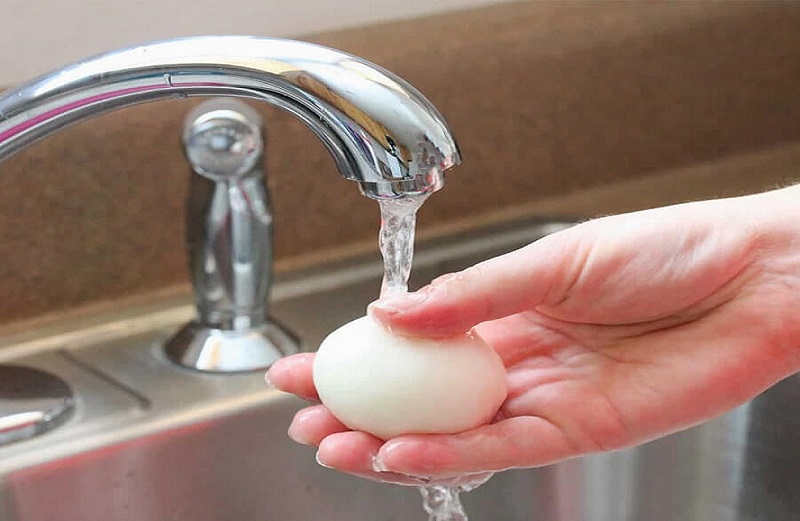
The food consumption pattern in India is gradually getting diversified. Livestock products are of utmost importance in this diversified menu. There are numerous recipes that require eggs to be added but how safe is it to consume eggs without cleaning them? Should the eggs be washed or sanitized before consumption
FSSAI defines Egg as “eggs-in-shell other than broken, incubated or cooked eggs, laid by poultry species or birds meant for direct human consumption or the preparation of egg products.”
Eggs can taste and smell fine, but they may still have harmful microorganisms. Certainly, the dirt on the egg is generally organic material including fecal matter which may have harmful bacteria.
It is important to note that the quality and appearance of eggs depend mostly on storage and the length of the storage period.
Shelf life of an egg: Eggs keep their freshness for up to 10 to 12 days after they have been laid at room temperature of 280 C ±20 C, but the shelf life shortens with higher temperatures. Eggs can lose as much quality in one day at room temperature as compared to the days in the refrigerator.
The risks associated with eggs:
Eggs are among the nutritious foods and can be part of a healthy diet. But there are a lot of risks associated with it and to be safe, eggs must be safely handled as unbroken, clean, fresh.
Shell eggs may have Salmonella enteritidis (SE) bacteria that can cause foodborne illness.
A report was released by Interagency Food Safety Analytics Collaboration (IFSAC) about foodborne illness outbreak sources in the United States in 2019 for Salmonella, Listeria monocytogenes and two other microorganisms. Among the annual reports of IFSAC, this was the first time in which Listeria illnesses were also attributed to either Other Produce or Eggs.
More than 75% of Salmonella illnesses were attributed to seven food categories: Eggs, Chicken, Fruits, Pork, Seeded Vegetables (such as tomatoes), Other Produce (such as nuts), and Turkey.
Is washing or cleaning of eggs necessary?
Before taking a call on whether the eggs must be cleaned or not, we should first have to understand the basics of the egg’s structure.

The egg has a cuticle as a topmost layer where it is made of a protein layer that covers the surface of the egg and fills the pores that allow the air inside for the growing chick. The purpose of the cuticle is to prevent the bacteria from entering the egg and to form the first line of defense against infection.
Bacteria can be present on the outside of an Eggshell because the egg exits the hen’s body through the same passageway as feces is excreted.
Considering cuticles, the washing of eggs may damage the cuticle and eventually leave the eggshells porous. This process may affect the eggshell cuticle layer and may allow the harmful bacteria to enter the eggs increasing the risk of contamination as the wash water can seep into the egg through the pores in the shell.
Proper handling of Eggs-
DOs √
DONTs ×
Implementing preventive measures like ensuring a clean and hygienic processing environment along with personal hygiene would reduce the number of infections from eggs.
© 2024 Created with Kumaran Educational Foundation


21 Comments
I loved as much as you will receive carried out right here The sketch is tasteful your authored subject matter stylish nonetheless you command get got an edginess over that you wish be delivering the following unwell unquestionably come further formerly again as exactly the same nearly very often inside case you shield this hike
Site fantástico Muitas informações úteis aqui estou enviando para alguns amigos e também compartilhando deliciosos E claro obrigado pelo seu esforço
olá, gosto muito da sua escrita, tanto que mantemos uma correspondência extra sobre sua postagem na AOL. Preciso de um especialista neste espaço para desvendar meu problema. Talvez seja você. Estou ansioso para vê-lo
Ny weekly Pretty! This has been a really wonderful post. Many thanks for providing these details.
Fourweekmba Pretty! This has been a really wonderful post. Many thanks for providing these details.
I was recommended this website by my cousin I am not sure whether this post is written by him as nobody else know such detailed about my difficulty You are wonderful Thanks
I do not even know how I ended up here but I thought this post was great I dont know who you are but definitely youre going to a famous blogger if you arent already Cheers
What i do not realize is in fact how you are no longer actually much more wellfavored than you might be right now Youre very intelligent You recognize thus considerably in relation to this topic made me in my view believe it from numerous numerous angles Its like men and women are not fascinated until it is one thing to do with Lady gaga Your own stuffs excellent All the time handle it up
Simply Sseven I like the efforts you have put in this, regards for all the great content.
Hi i think that i saw you visited my web site thus i came to Return the favore Im attempting to find things to enhance my siteI suppose its ok to use a few of your ideas
certainly like your website but you need to take a look at the spelling on quite a few of your posts Many of them are rife with spelling problems and I find it very troublesome to inform the reality nevertheless I will definitely come back again
I loved as much as youll receive carried out right here The sketch is attractive your authored material stylish nonetheless you command get bought an nervousness over that you wish be delivering the following unwell unquestionably come more formerly again as exactly the same nearly a lot often inside case you shield this hike
GlobalBllog I’m often to blogging and i really appreciate your content. The article has actually peaks my interest. I’m going to bookmark your web site and maintain checking for brand spanking new information.
I have read some excellent stuff here Definitely value bookmarking for revisiting I wonder how much effort you put to make the sort of excellent informative website
Lois Sasson I just like the helpful information you provide in your articles
FinTechZoomUs I just like the helpful information you provide in your articles
Mountsinai naturally like your web site however you need to take a look at the spelling on several of your posts. A number of them are rife with spelling problems and I find it very bothersome to tell the truth on the other hand I will surely come again again.
Just wish to say your article is as surprising The clearness in your post is just cool and i could assume youre an expert on this subject Fine with your permission allow me to grab your RSS feed to keep updated with forthcoming post Thanks a million and please keep up the enjoyable work
Baddiehub There is definately a lot to find out about this subject. I like all the points you made
Blue Techker Pretty! This has been a really wonderful post. Many thanks for providing these details.
NY weekly Nice post. I learn something totally new and challenging on websites